Free in-home water test for Highlands Ranch homeowners — call (000) 000-0000
Water Softener Installation Whole-House Filtration Reverse Osmosis Water Testing Appliance & Fixture Protection Water Quality FAQ About Contact
Whole-House Water Filtration

Whole-House Water Filtration in Highlands Ranch, CO

Filtration and softening solve different problems. Softening removes hardness minerals; whole-house filtration targets chlorine taste and odor, sediment, and the seasonal taste shifts Highlands Ranch Water itself acknowledges in its water quality FAQ. Here's what a whole-house system actually does, and when your home needs one.

Chlorine taste & odor reduction Sediment protection for fixtures Whole-home coverage, one install

It's easy to lump "filtration" and "softening" together, but they solve genuinely different problems, and Highlands Ranch homeowners often need to think about both. A water softener removes calcium and magnesium — the minerals that make Highlands Ranch's water 11 to 13 grains hard, per Highlands Ranch Water's own published data. A whole-house filtration system, by contrast, targets chlorine, sediment, and the organic compounds behind taste and odor changes, none of which a softener is designed to handle. Many Highlands Ranch homes end up with both, plumbed in sequence, because the two systems are solving problems that have nothing to do with each other.

This page focuses on filtration: what it removes, how the equipment works, and how to decide what your home actually needs — separate from the hardness conversation covered on our water softener page.

What whole-house filtration actually removes

A properly designed whole-house filter is typically built in stages, each targeting a different category of what's in municipal tap water:

Two taste issues the utility's FAQ flags are worth calling out because filtration won't fix them: sulfur smells most often trace back to the anode rod inside a home's own water heater reacting with sulfate, not the incoming supply, and metallic tastes are generally tied to natural mineral content rather than anything a sediment or carbon filter is built to strip out. A water heater flush or anode rod replacement solves the first; the mineral taste is simply part of what 11–13 grain water tastes like unless you're filtering it more aggressively at the point of use, which is where reverse osmosis comes in for drinking water specifically.

How a whole-house system is built

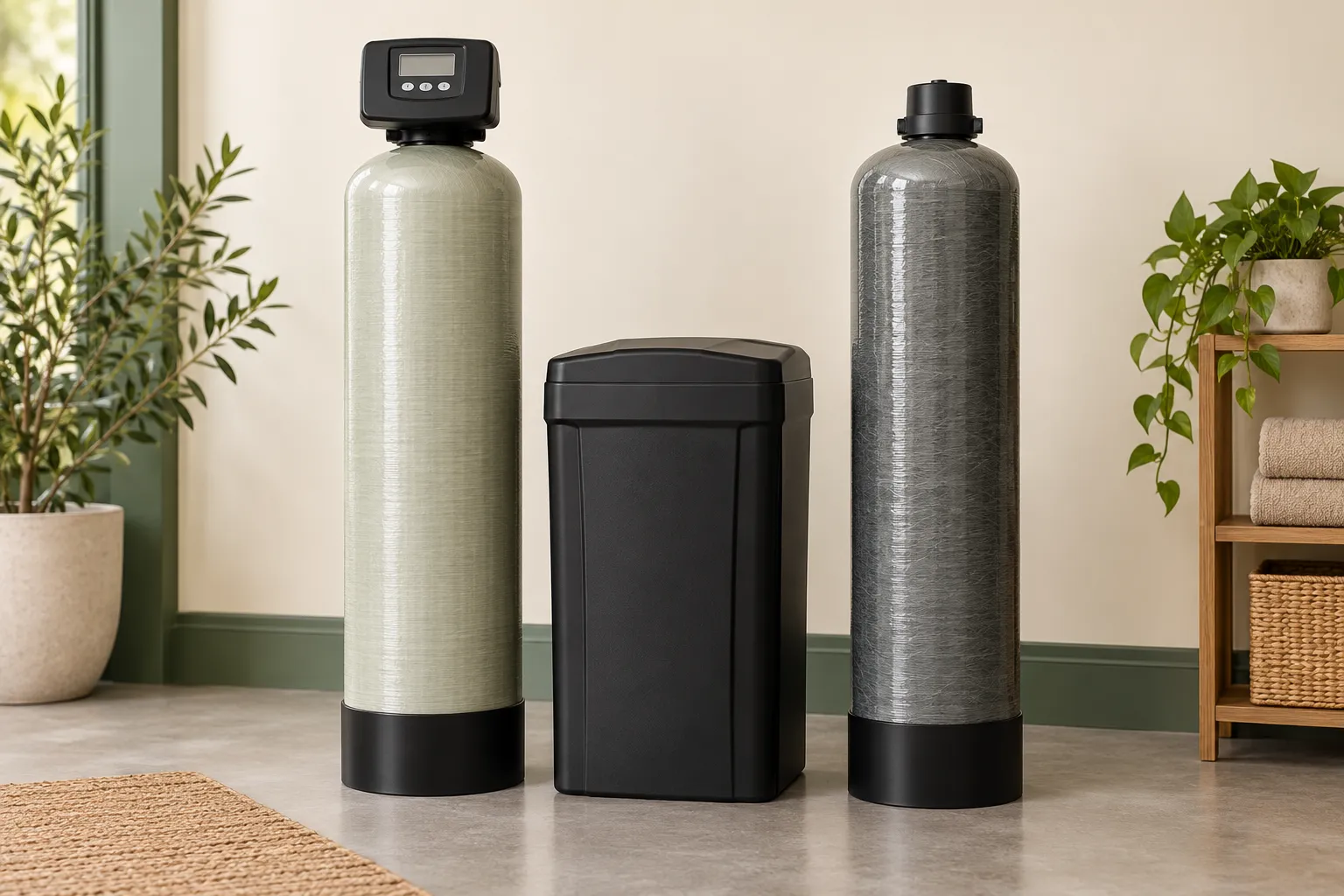
Most whole-house filtration systems installed in Highlands Ranch homes are multi-stage, tank-based systems plumbed at the point where the main line enters the house — meaning every fixture in the home, from the kitchen sink to the guest bathroom to the ice maker, gets filtered water without needing separate filters at each tap.

A typical configuration runs sediment filtration first, to protect the more expensive carbon media downstream from clogging prematurely, followed by a carbon filtration tank sized to the home's water usage and pipe flow rate. Larger homes with higher fixture counts — common in newer Highlands Ranch construction with multiple bathrooms, a wet bar, and irrigation tie-ins — need correspondingly larger tank capacity and flow rate to avoid a pressure drop when multiple fixtures run at once.

SEDIMENT CARBON MAIN LINE → WHOLE HOME

Filtration media comparison

Media typeTargetsTypical service life
Sediment (spin-down or cartridge)Sand, rust, particulate2–3 months (cartridge), longer for spin-down/self-flushing types
Granular activated carbon (GAC)Chlorine taste/odor, some organic compounds6–12 months, or longer in tank-style systems
Catalytic carbonChlorine plus a broader range of taste/odor compoundsSimilar to GAC; higher upfront cost, better performance at scale
KDF media (often blended with carbon)Chlorine, some scale-reduction benefit, bacterial growth resistance in the tankTypically co-rated with the carbon it's blended with

Whole-house filtration vs. point-of-use filters

A pitcher filter or a single under-sink cartridge only treats the water passing through that one tap. That's fine for drinking water at one sink, but it does nothing for the shower where chlorine off-gasses into steam, the washing machine, or the ice maker. Whole-house filtration treats every fixture from a single install point, which is generally the more efficient choice for households wanting consistent water quality throughout the home rather than at one location. Many homes still add a dedicated reverse osmosis system at the kitchen sink on top of whole-house filtration, since RO targets a different, more thorough level of drinking-water treatment than carbon filtration alone provides.

Installation and what to expect

Most whole-house filtration installs take a few hours. If a softener is being installed at the same time, filtration is typically staged before the softener in the line so sediment doesn't shorten the softener resin's working life.

Cost and maintenance

Typical installed cost range

Roughly $900–$2,800 installed for a two-stage sediment and carbon whole-house system, depending on tank size, media type, and flow rate requirements. Systems combining filtration and softening in one integrated install typically run higher than either system alone but less than the sum of two separate installs done at different times.

Ongoing maintenance is straightforward: sediment cartridges are swapped every 2–3 months (spin-down sediment filters can go longer between cleanings), and carbon media is replaced or the tank re-bedded roughly annually, depending on household water use and the specific media chosen. Keeping to that schedule matters more than most homeowners expect — spent carbon media doesn't just stop filtering, it can become a growth surface for bacteria in low-flow periods, which is part of why KDF-blended carbon has become a popular choice in tank-style systems.

Why this matters more in a home with premium finishes

Sediment and chlorine exposure show up differently depending on what a home is finished with. Large-format tile and natural stone in bathrooms and showers are more porous than standard ceramic and can hold onto mineral and sediment residue in grout lines longer. Steam showers and humidifiers pull water directly from the house line and concentrate whatever's in it as they vaporize, which makes chlorine off-gassing and mineral scale more noticeable in a steam unit than in an ordinary shower. Built-in ice makers and beverage/wine fridges plumbed to the house line are also common in higher-end Highlands Ranch kitchens, and both are sensitive to sediment and chlorine taste in ways a standard refrigerator ice tray simply isn't.

Frequently asked questions

Does whole-house filtration soften my water too?
No. Standard sediment and carbon filtration removes particulate, chlorine, and taste/odor compounds, but it does not remove calcium and magnesium hardness minerals. Softening requires a dedicated ion-exchange softener — see our softener page for that side of the equation.
Why does my water taste or smell different at certain times of year?
Highlands Ranch Water's own FAQ points to a few common, harmless causes: chlorine disinfection, seasonal earthy or moldy notes from organic matter in the South Platte River supply, sulfur smells that usually trace back to a home's water heater anode rod rather than the supply itself, and mineral content producing a metallic taste. None indicate a safety issue — but chlorine and organic taste/odor compounds are exactly what whole-house carbon filtration is built to reduce.
How often do the filters need to be changed?
Sediment pre-filters typically need replacement every 2–3 months. Carbon filtration media generally lasts 6–12 months or longer, depending on household water use and tank size. Falling behind on sediment changes shortens the life of the carbon stage and any softener installed downstream.
Do I still need this if I already have a water softener?
A softener alone doesn't remove chlorine, sediment, or taste/odor compounds — it's built specifically to exchange out hardness minerals. Most Highlands Ranch homes running both systems stage sediment filtration first, then softening, sometimes with carbon filtration added either before or after depending on the equipment configuration an installer recommends for your specific plumbing.

Related reading

Compare this with water softener installation, see what a free water test covers, or read the full Highlands Ranch water quality breakdown.

Find out what's actually in your water

A free in-home test checks hardness, chlorine, and TDS so any filtration recommendation is based on your water, not a guess.

Get My Free Water Test
Call (000) 000-0000 — Free Water Test